


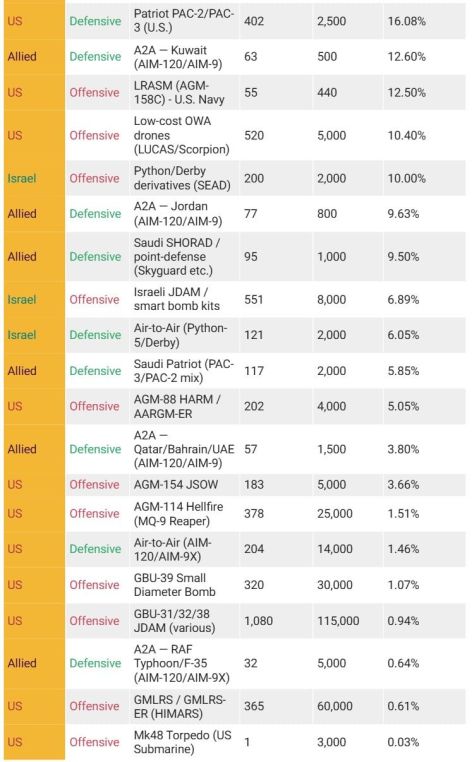
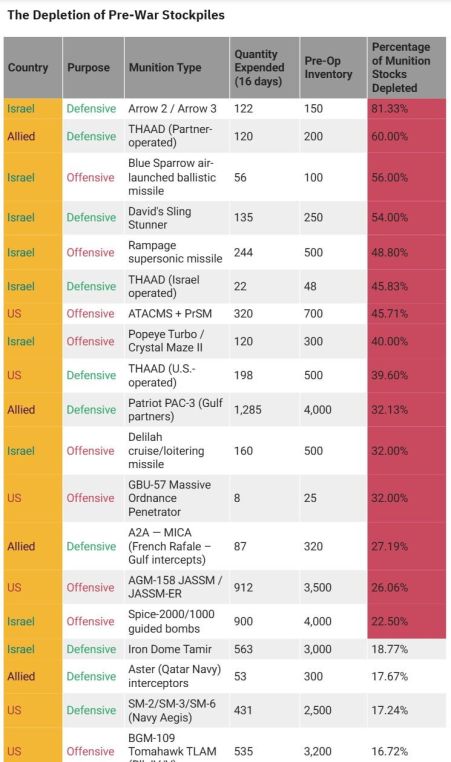
RUSI estimated, how much ammunition the US, Israel, and allies in Iran approximately consumed in 25 days of operation (data as of March 24).
Missiles expended for hitting tactical, operational, and strategic rear areas (US only):
▪️912 JASSMs;
▪️535 Tomahawks;
▪️320 ATACMS + PrSMs.
Total: 1767
This does not include aerial bombs and specialized missiles such as the anti-radar AGM-88 HARM.
At the same time, I’m watching Ukraine extracting 5 miserable Storm Shadows a month. And what things Ukraine is doing with these 5 miserable Storm Shadows (Bryansk won’t lie)… And what things Ukraine would do if it had such a quantity at its disposal.
The column on the right shows the % of expenditure of a particular ammunition. In red – what has been expended over 20%.
Expended air defense assets (I only count those primarily intended for intercepting ballistic missiles):
▪️1285 PAC-3s for Patriot;
▪️563 Tamirs for “Dome”;
▪️431 SM-2/3/6s for AEGIS;
▪️402 PAC-2s for Patriot;
▪️198 THAADs (US);
▪️135 “David’s Sling”;
▪️122 Arrow-2/3s (Israel);
▪️120 THAADs (allies);
▪️117 PAC-2/3s (Saudi Arabia);
▪️53 Asters (Qatar);
▪️22 THAADs (Israel).
Total: 3448
Iran launched 1300 ballistic missiles and 3555 drones.
According to the rules, the normal expenditure for intercepting ballistic missiles is 2 interceptors per 1 missile. That is, with normal expenditure, they should have spent 2600 interceptors. An overspend of over 800 interceptors. Apparently, a lot of them were spent on “Shahids”, although it’s impossible to calculate it exactly.
And finally, from the RUSI analysis
The analysis highlights three key categories that determine the coalition’s resilience
▪️ interceptor missiles
▪️ long-range strike weapons
▪️ sensor and control systems.
It is on these that it depends whether the bases will remain protected, whether the coalition will be able to strike with minimal risk, and whether a coherent and clear picture of the battle will be maintained.
There are still enough conventional munitions, but they cannot replace effective large-scale threat destruction and do not compensate for the loss of radar coverage, which makes interception economically justified.
Since Iran damaged at least 12 American and allied radars and satellite terminals, the effectiveness of interception has significantly decreased. The use of 10-11 interceptors per ballistic missile or 8 Patriot missiles per drone is becoming too disproportionate.
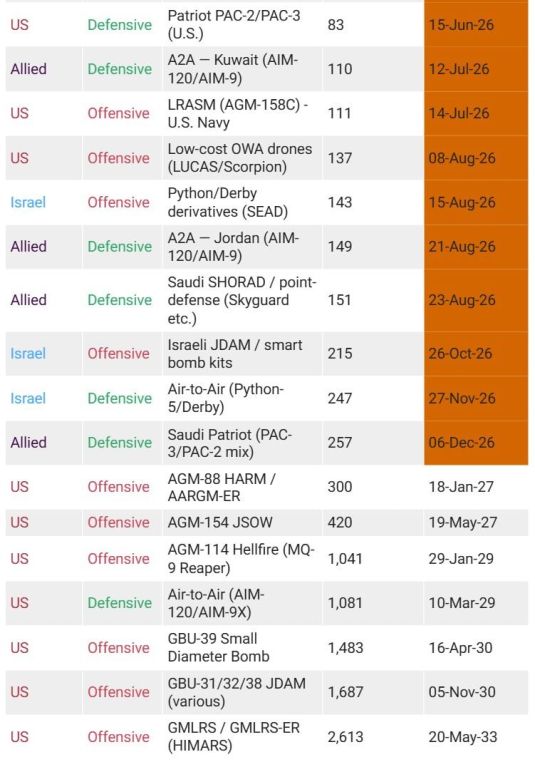
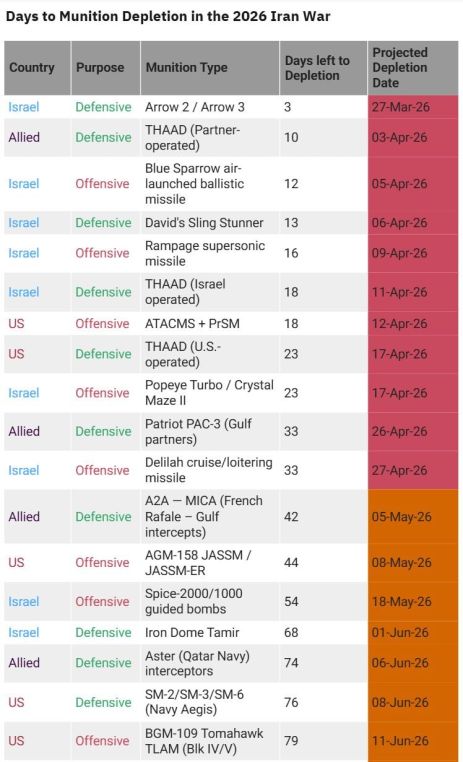
Most impressively, the US could exhaust its supplies of ATACMS/PrSM missiles for ground target strikes and THAAD interceptors in about a month.
❗️ Israel is in an even more critical situation – its Arrow missiles are likely to be completely exhausted by the end of March.
The war could continue with other munitions, but this would mean accepting a much higher risk to aviation and more “breakthroughs” of missiles and drones. It is precisely the problem of “empty warehouses” that may explain why Trump is already talking about “winding down” the war with Iran. It could take years to replace what was spent in just 16 days.
Although the defense industry is now producing most of these munitions, they are extremely complex and difficult to scale. For example, it will take at least 5 years to replenish the stocks of over 500 Tomahawk cruise missiles that have already been launched.


You must be logged in to post a comment.