

Their response
The importance of this text lies not only in its political content but also in its linguistic structure, lexical choices, translation deviations, and semiotic architecture, which reflect the security doctrine and political ontology of the Islamic Republic of Iran during one of the Middle East’s most critical historical junctures. To extract the hidden semantic and strategic layers of this text, three distinct yet intertwined methodological frameworks were utilized: First, “Semiotics,” which examines the signifying systems, indexicalities, and binary oppositions to understand how power and space are distributed in the text. Second, “Forensic Linguistics,” focusing on author attribution, speech act analysis, and the ideological manipulations and deviations in the translation process from the source language (Persian) to the target language (English). Third, “Stylometry,” which evaluates the linguistic fingerprint, syntactic complexities, and formulaic sequences to trace its institutional origins—particularly its connection to psychological warfare networks and institutions like the Masaf Institute.

Geopolitical Context and Conflict Background in March 2026
Analyzing any strategic text is impossible without a deep understanding of the historical and operational context of its genesis. The statement in question was not issued in a vacuum; it is the direct product of a highly militarized and volatile environment in late winter and early spring of 2026. Prior to the issuance of this text, the region witnessed an unprecedented escalation of tensions and the crossing of traditional red lines among major players.
In late February 2026, the third round of secret, indirect negotiations between the Islamic Republic of Iran and the United States in Geneva, attended by mediators such as Oman and American diplomats including Jared Kushner and Steve Witkoff, faced a deadlock and mutual disappointment. Following the collapse of these talks and the failure to reach a framework to reduce nuclear and missile tensions, the United States and Israel launched extensive, joint military strikes against Iran’s strategic and vital infrastructure. These strikes, designed to weaken the war machine and alter the calculations of Tehran’s leaders, prompted a reciprocal and escalatory response from the regional coalition led by Iran (the Axis of Resistance).
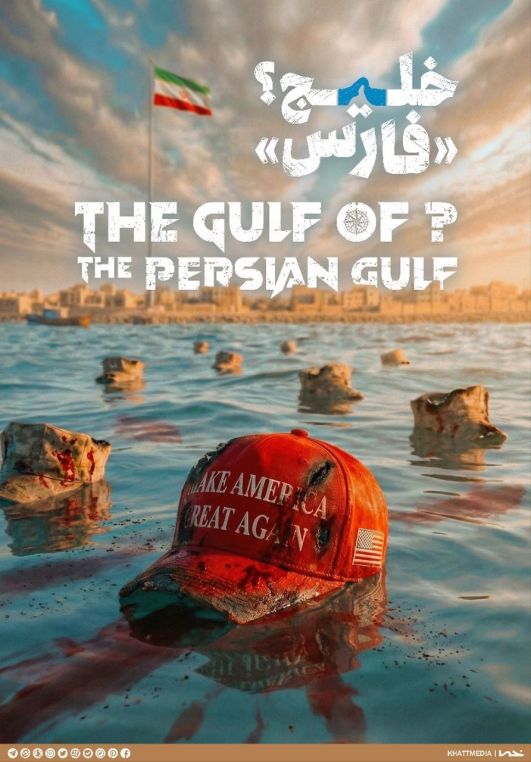
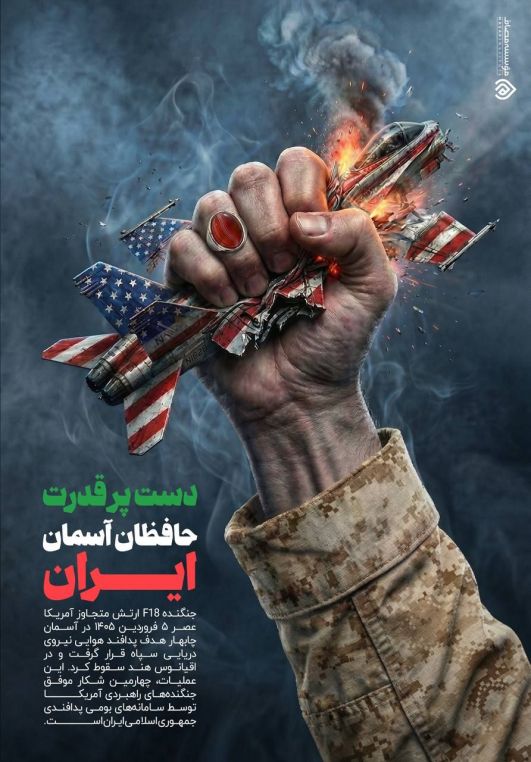
Field data indicates that this conflict rapidly took on regional dimensions; in the days leading up to the publication of this statement (around the 19th day of the war), heavy missile strikes were reported on Qatari refineries and Saudi fuel centers, and inside Iran, the assassination of senior officials, including the Minister of Intelligence, occurred in joint US-Zionist attacks. In such an apocalyptic and volatile atmosphere, accompanied by psychological warfare campaigns and military simulations by radical domestic institutions like the Masaf Institute , the text of Iran’s reaction to the ceasefire proposal was framed and published not as a diplomatic document for compromise, but as a tool to consolidate hegemony, redefine the boundaries of the conflict, and exert maximum pressure on the enemy’s strategic perception.
Semiotic Analysis-Reproduction of Power, Space, and Objective Reality
Structuralist semiotics, by focusing on the relationship between the signifier and the signified, allows for an understanding of how political reality is constructed by power institutions. In this statement, the author actively polarizes the semantic field through chains of syntagmatic and paradigmatic associations, drawing clear lines between “us” and “the other.”
Cognitive Polarization and Binary Oppositions
Qualitative and structural data from the text show that the author has actively polarized the semantic field. The language of the text is built upon a set of binary oppositions designed to legitimize Iran’s position and delegitimize the United States’ proposals. These oppositions do not merely assign moral value; they engineer the reader’s perception of power dynamics.
Semantic Components Related to Iran (Self)
Semantic Components Related to the US and Trump (Other)
Semiotic and Strategic Implication
Rationality and Collective Agency (“Iran will end the war at a time it decides itself…”)
Transient and Whimsical Individualism (“not when Trump intends to end it…”)
Institutionalizing Iran’s systemic stability against the individual and unstable decisions of the American leader.
Objective Field Reality (“battlefield,” “objective conditions”)
Illusion and Exaggeration (“proposals that are excessive”)
Monopolizing ownership of truth and epistemological dominance over the war’s narrative.
Legal Rights and Legitimacy (“defending itself,” “natural and legal right”)
Works cited
Aggression and Illegitimacy (“aggression and assassination,” “deception to increase tensions”)
Framing Iran’s actions within international law and US actions as war crimes and norm violations.
Regional Continuity and Stability (“all resistance groups,” “throughout the region”)
Treachery and Hidden Intentions (“had no real intention to negotiate”)
Creating absolute distrust in Western diplomatic mechanisms and legitimizing the continuation of the battle.
This conceptual map and oppositional structure elevate the reading of the text from a mundane diplomatic statement to a confrontational manifesto, closing the door on any moderate interpretation.
Institutional Reduction and the Semiotics of the Name “Trump”
One of the most prominent semiotic strategies in this text is the indexicality of the actors. The text consistently grants the Islamic Republic of Iran the personality and agency of a macro-state (“Iran has evaluated,” “Iran has rejected,” “Iran will end the war”). Conversely, the representation of the United States fluctuates between institutional critique and extreme personalization.
The most obvious sign of this is the use of the proper noun “Trump” without any prefix, honorific title, or institutional identifier (such as President, US Government, or White House). The first paragraph of the statement says: “…and it will not allow Trump to determine the timing of the war’s end.” In international legal and diplomatic discourse, state actions are generally referred to the governing structure or official authority with their institutional title. Reducing the entire war and political machine of a global superpower to the surname “Trump” is a semiotic act of “Institutional Erasure.” This rhetorical minimization serves dual psychological and structural functions: first, it degrades the global power of the United States to an isolated, unpredictable, and illegitimate individual; and second, it portrays Iran as a macro-structure—historical and logical—that is superior to and dominant over the fleeting desires of a single politician.
Semiotics of Space-Expanding Sovereign Borders and the Resistance Axis
The spatial and geographic signs in this statement indicate a doctrinal shift in Iran’s understanding of its national security. In the fourth condition, the text stipulates that the end of the war must be “implemented on all fronts and concerning all resistance groups involved in this battle throughout the region.”
From the perspective of cognitive linguistics, this clause expands the signifier “Iran” from a nation-state confined within specific geographic borders to a transnational geopolitical entity—namely, the “Axis of Resistance.” The term “war” is detached from the independent borders of the Islamic Republic and projected across the entire expanse of the Middle East. This semiotic expansion asserts that the security of the central core (Tehran) is inextricably tied to the operational status of non-state proxy actors across the region. Consequently, a bilateral ceasefire (solely between Tehran and Washington) is represented as semiotically impossible; only a comprehensive, regional cessation of hostilities can satisfy the redefined spatial parameters of Iran’s sovereignty.
Furthermore, in the fifth condition, sovereignty over the “Strait of Hormuz” is introduced as a “natural and legal right,” and the opposing party’s recognition of the guarantee of the implementation of commitments must be recognized. Here, the Strait of Hormuz is not merely a physical waterway, but a metonymy for global energy hegemony and Iran’s geoeconomic leverage. By inserting this issue into a potential military agreement, the author has elevated a geographic coordinate to the highest symbol of the opposing party’s legal and international capitulation.
Forensic Linguistics Analysis-Author Attribution, Pragmatics, and Translation Deviation
Forensic Linguistics utilizes scientific linguistic tools to investigate the nature, origins, and hidden intentions in strategic texts. In this section, the author’s identity mask, the performative force of the words, and the vital gaps between the source text and its English translation are autopsied.
The Cloak of Ambiguity and the Enigma of the “Senior Political-Security Official”
The analyzed text was published quoting a “senior political-security official” via the “Press TV” network. In the forensic analysis of state media communications, such pseudo-anonymities act not to protect a whistleblower’s identity, but as a deniable yet authoritative mouthpiece for higher-level institutions such as the Supreme National Security Council (SNSC) or the upper echelons of the Islamic Revolutionary Guard Corps (IRGC).
The hyphenated descriptive combination “political-security” is a highly specific stylistic marker in the bureaucratic literature of the Islamic Republic, usually denoting an individual operating at the intersection of the diplomatic apparatus, the Ministry of Intelligence, and military-security institutions. This deliberate anonymity allows the state to broadcast highly aggressive and maximalist positions to the world (such as “inflict severe blows on the enemy”) without creating formal, legal commitments for the Supreme Leader or the President in diplomatic forums. This approach is the perfect manifestation of the principle of “strategic ambiguity” in crisis communication.
Pragmatics and Speech Act Theory
Applying John Searle and J. L. Austin’s “Speech Act Theory,” one can deduce that this statement is not a descriptive text (reporting a reality), but a performative text (altering reality). The text primarily operates through “Commissives” (statements that commit the speaker to a future course of action) and “Directives” (statements that compel the listener to take a particular action).
- Commissive: “Iran will end the war at a time it decides itself…” (Commitment to independent scheduling).
- Commissive/Threatening: “…is ready to continue defending itself and inflict severe blows on the enemy” (Commitment to inflicting mutual violence).
- Directive: The entirety of the five conditions, formulated as prescriptive mandates to force the US to change its behavior.
The illocutionary force of this document is entirely coercive and absolute. The text explicitly rejects the “Cooperative Principle” defined by Paul Grice, signaling a breakdown in the conventional rules of dialogue. The sentence “no negotiations will take place before that” is a performative utterance that unilaterally blocks any diplomatic interaction until the conditions are met. The pragmatic implication is clear: the current state of war is the new baseline, and the burden of changing this reality rests entirely on the enemy’s submission.
Translation Deviation Analysis-The Enigma of the “Ultimate Enemy” and Ideological Sanitization
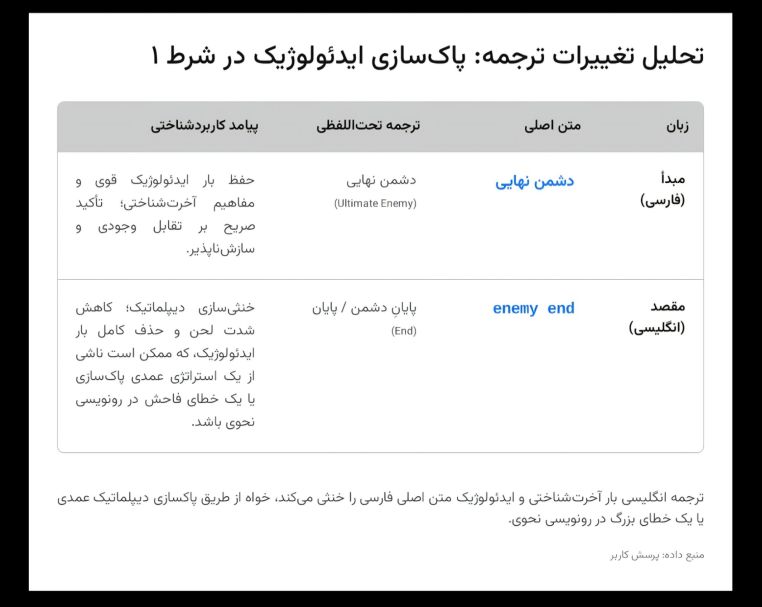
One of the most surprising and key findings of this forensic analysis is the existence of a critical translational deviation and gap between the source text (Persian) and the target version (English) presented to international audiences. This inconsistency occurs in the first condition of the ceasefire.
The Persian text reads:
“۱- تجاوز و ترور توسط دشمن نهایی” (1- Aggression and terror by the ultimate enemy)
The term “ultimate enemy” (دشمن نهایی) in the military and ideological discourse of the Islamic Republic is a heavily loaded, apocalyptic, and eschatological phrase generally used to refer to the United States or Israel, implying a final, fateful confrontation before the absolute victory of truth over falsehood.
However, in the English translation provided to global media, this phrase has been rendered as:
“1- Aggression and assassination by the enemy end”
Here, the Persian adjective “nahaee” (meaning Ultimate or Final) has been translated by the English translator as the verb “end”; as if the Persian text read “aggression and terror by the enemy must end.” From a forensic linguistics perspective, this deviation cannot simply be considered a simple error, and two main hypotheses are proposed:
- Ideological Sanitization: The foreign propaganda machine (Press TV) intentionally censored and softened the radical, apocalyptic term “ultimate enemy” in the English version to present a more rational, diplomatic, and legalistic image to the international community. The phrase “aggression and assassination by the enemy end” sounds like a standard ceasefire condition, whereas “aggression… by the ultimate enemy” carries a fiercely religious and uncompromising tone.
- Transcription Error in the Persian Text: A second possibility is that during the drafting of the Persian text, a typographical or syntactic abbreviation error occurred, and the author intended to write “aggression and terror by the enemy must end” (نهایی شود/پایان یابد), but the word was inserted incompletely.
Nevertheless, given the footprint of the “Masaf Institute” at the end of the text—an institution specializing in producing and promoting apocalyptic literature, the final battle, and antisemitism under the guise of strategic analysis —the use of the phrase “ultimate enemy” in the Persian text is almost certainly a highly deliberate lexical choice to agitate the domestic social base, which was semantically altered in the English version due to international sensitivities.
Stylometric Analysis-Institutional Fingerprint and Influence Networks
Stylometry involves the quantitative and qualitative analysis of writing style to identify the author, institutional affiliation, or genre of a text. By examining lexical density, syntactic complexity, and formulaic sequences, it becomes evident that this statement is not a common Ministry of Foreign Affairs document, but the product of psychological operations apparatuses.
Syntactic Complexity and Hypotaxis
The Persian text of this statement possesses a high degree of syntactic complexity, heavily relying on hypotactic structures and dependent or conditional clauses. For instance, consider this structure:
“Iran has evaluated these proposals, like the two previous times (the spring and winter 2025 negotiations), and considers them a deception to increase tensions, as in both previous instances, the US had no real intention to negotiate and launched a military attack on Iran.”
This single sentence contains multiple nested propositions connected by subordinating conjunctions (“as” – indicating causality) and temporal comparative phrases (“like the two previous times” – historical reference). This level of clausal entanglement is a hallmark of “administrative-political Persian” in macro-state documents. This writing style is designed to evoke an aura of precise calculation, continuity of historical memory, and impenetrable logic. The high frequency of compound verbs based on abstract nouns (like “evaluated,” “will end”) increases the stylistic distance of the text from colloquial language, firmly anchoring it within the state’s hardline bureaucracy.
Lexical Richness and Formulaic Sequences (N-Grams)
Stylometric analysis reveals the text’s heavy reliance on specific formulaic sequences (N-grams) that act as “Ideological Shibboleths” in the Islamic Republic’s literature. Although the Type-Token Ratio is relatively low across the entire text, indicating a high repetition of keywords and thematic focus, the extracted n-grams are highly significant:
Formulaic Sequence (N-gram)
Frequency in State Discourse
Stylistic and Strategic Implication
“Natural and legal right” (حق طبیعی و قانونی)
Very High
Converting geopolitical demands (control of the Strait of Hormuz) into non-negotiable legal axioms in Iran’s nuclear and border literature.
“Severe blows to the enemy” (ضربات سختی به دشمن)
Very High
Linguistic standardization in IRGC retaliatory statements following assassinations and military clashes.
“Resistance groups” (گروههای مقاومت)
Very High
Official encoding and diplomatic legitimization of transnational proxy networks within the country’s security architecture.
Institutional Connection Point-The Footprint of the Masaf Institute
The most definitive forensic and stylometric sign in the entire text is the final sentence appended to the Persian version:
“✅ Follow the latest news and field analysis of the war at Masaf”
The “Masaf Institute,” managed by the well-known theoretician and propagandist Ali Akbar Raefipour, is a fiercely conservative, extremist, and influential think tank and media arm known for promoting anti-Western, anti-Zionist, and often conspiratorial and apocalyptic narratives. The inclusion of this Call-to-Action at the end of a “senior security official’s” statement explicitly links the distribution—and potentially the ideological drafting and framing—of this text to the Masaf media network.
From a stylometric perspective, the phrases used in the statement perfectly overlap with the known corpus of the Masaf Institute. This institute has historically promoted concepts such as the “final battle” , the inherent and demonic deceit of the West, and the sanctification of the Axis of Resistance as a unified front, possessing a long track record of producing hashtag campaigns, war simulations, and cyber psychological operations.
The forensic conclusion from this section is that the text in question is not a sterilized, diplomatic output from the Ministry of Foreign Affairs; rather, it is a hybrid product: a declaration of macro-state policy (likely approved by the Supreme National Security Council) that has been linguistically packaged, stylized, and distributed by hardline psychological warfare units linked to Masaf to maximize its effectiveness in mobilizing domestic public opinion and creating psychological deterrence on an international level.
Linguistic and Strategic Autopsy of the Five Conditions
A meticulous examination of the five ceasefire conditions reveals Tehran’s mechanisms of Coercive Diplomacy. In this section, the text shifts from Epistemic Modality (commenting on the degree of certainty of propositions, such as the US proposals being a deception) to a rigid and inflexible Deontic Modality (judgments based on obligation, necessity, and prohibition).
Condition One-End to Aggression and Assassination
(Aggression and assassination by the ultimate enemy) As analyzed in the translation deviation section, this clause harbors a key semantic gap. Nevertheless, the juxtaposition of the words “aggression” (directed at the violation of territorial sovereignty) and “assassination/terror” is a direct, targeted linguistic reaction to the recent tactical operations by the US and Israel in February and March 2026; especially the assassination of prominent figures such as the Iranian Minister of Intelligence on the 19th day of the war. By labeling the hostile state’s military and security actions as “terror,” the Islamic Republic confiscates the high moral and legal ground, framing its own actions as “legitimate defense” against state terrorism.
Condition Two-Creating Objective Conditions to Ensure Non-Repetition of War
(Objective conditions are created to ensure the war will not be repeated) The phrase “objective conditions” introduces a supreme level of Bureaucratic Ambiguity into the text. The text refrains from precisely defining these conditions, thereby providing Iran with unlimited strategic flexibility. This linguistic approach places the Burden of Proof entirely on the shoulders of the United States to prove its adherence to a standard whose indicators are defined and interpreted solely by Tehran. The gerund phrase “non-repetition” is a maximalist demand to achieve absolute, irreversible deterrence.
Condition Three-War Reparations
(Compensation and war reparations are guaranteed and clearly resolved) The lexical repetition in the Persian version (“compensation and war reparations”), although stylistically clunky, is highly emphatic legally. This condition transforms the mutual and neutral concept of a “military ceasefire” into a “punitive legal settlement.” Demanding reparations from the United States indicates a linguistic framing wherein Iran pre-emptively introduces itself as the definitive victor of the battlefield and the Aggrieved Party. This terminology is reminiscent of punitive post-world-war treaties and is incompatible with the nature of a mutual cessation of hostilities.
Condition Four-End of the War on All Fronts and for the Axis of Resistance
(The end of the war is implemented on all fronts and concerning all resistance groups involved in this battle throughout the region) This condition, utilizing Universal Quantifiers such as “all fronts,” “all groups,” and “throughout the region,” expands the spatial and geographic reference of the agreement to the maximum extent possible. The text inextricably links Iran’s survival and national security to the operational life and security of its proxy networks in Lebanon, Iraq, Syria, and Yemen. Linguistically, this proposition obsoletes any possibility of “phased,” “localized,” or “geographically limited” de-escalation, imposing an Indivisible Security Architecture on the negotiating table.
Condition Five-Sovereignty over the Strait of Hormuz
(Iran’s sovereignty over the Strait of Hormuz is a natural and legal right and will be so, and the guarantee of the implementation of the opposing party’s commitments must be recognized) The final condition transitions the discourse from the realm of pure military operations to the arena of global geoeconomics and energy security. The use of the compound copula “is and will be so” expresses an eternal, immutable truth. By obliging the opposing party to recognize the “guarantee of the implementation of commitments” regarding this strategic maritime chokepoint, Iran is attempting to codify its hegemony over the world’s most vital energy artery within the heart of a legal ceasefire document, exploiting it as a Sword of Damocles against the global economy.

Strategic Implications
The simultaneous application of semiotics, forensic linguistics, and stylometric analysis to this bilingual statement unveils a complex architecture in Iran’s strategic communications. This text is not a simple rejection of a diplomatic proposal; it is an ideological manifesto, a multi-layered psychological operation, and a maximalist geopolitical doctrine compressed into a press release.
The evidence extracted from this analytical autopsy proves the following definitive conclusions regarding the nature and hidden intentions of the text:
- The Illusion of the “Senior Official” and Message Engineering: Stylometric evidence, highly bureaucratic syntax, and the explicit watermark of the Masaf Institute indicate that this text was meticulously engineered by the state’s psychological operations and ideological institutions. The hidden identity of the “senior political-security official” is most likely not a single real person, but a “Composite Institutional Voice” used to broadcast a message of absolute deterrence without entangling the formal diplomatic apparatus in apocalyptic rhetoric.
- Semiotic Redefinition of the Battlefield: By expanding the meaning of the word “Iran” to encompass all “resistance groups,” and by linking the issue of a military ceasefire to sovereignty over the “Strait of Hormuz,” the state structure has fundamentally rendered the possibility of a bilateral, limited de-escalation with the United States linguistically and strategically impossible. The text demands a comprehensive regional capitulation that recognizes the hegemony of the unified Axis led by Iran.
- Weaponization of Translation: The striking contradiction between “Ultimate Enemy” in the Persian version and “enemy end” in the English version is clear evidence of a dual-track messaging strategy. Domestic and regional audiences are fed an eschatological, uncompromising, and radical narrative of ultimate victory against an existential enemy, influenced by the doctrines of institutions like Masaf. Conversely, the English-speaking world is presented with a legal, sanitized, and refined list of diplomatic conditions stripped of their ideological weight.
- Semiotic Erasure of the Enemy: The continuous, derogatory, and suffix-free use of the name “Trump”—devoid of any institutional title—coupled with the description of US diplomacy as pure “deception,” indicates that Tehran does not recognize the current US administration as a legitimate and capable negotiating partner. This text establishes that, from Tehran’s perspective, any end to the war will not be the result of a bargained agreement with Trump’s team, but the consequence of a unilateral declaration by Iran after imposing its objective will on the battlefield.

Ultimately, the linguistic architecture of this statement is designed to project absolute systemic confidence in the midst of a severe military and security crisis. This text has weaponized complex syntax, spatial signifiers, and institutional anonymity to transform the American ceasefire proposal from a potential “off-ramp” into a platform for establishing and declaring its own regional hegemony. The indivisibility of the war fronts, the delegitimization of Western diplomatic tools, and the phase shift from military confrontation to geoeconomic extortion in the Persian Gulf are the foundational elements of a new doctrine woven precisely into the fabric of these words.


