


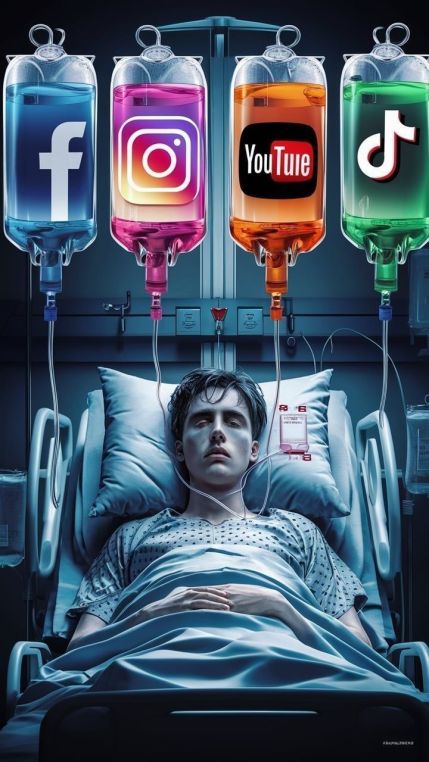
Social networks function as a circulatory system for modern influence, and the image captures that idea with unsettling clarity. A young patient lies motionless while translucent bags drip branded fluids straight into the body. Facebook, Instagram, YouTube, and TikTok appear less like tools and more like life support. The metaphor lands hard. Information no longer passes through reflection and judgment first. Content enters directly, steadily, and without pause.
Hybrid warfare thrives inside that condition. Influence campaigns no longer rely on tanks or missiles. Influence actors shape perception, emotion, and belief through continuous exposure. Platforms reward speed, outrage, and repetition. Algorithms favor material that provokes reaction rather than thought. Adversaries understand that dynamic and feed it deliberately. Narratives arrive prepackaged, emotionally charged, and optimized for spread. Audiences absorb them while scrolling, tired, distracted, and unguarded.
Power over public opinion grows stronger as barriers to participation fall. Anyone posts, shares, or comments. Grassroots voices gain reach, yet hostile manipulation hides easily inside that openness. Falsehood travels beside truth at equal speed. Volume replaces verification. Familiar slogans replace evidence. Repetition creates comfort, and comfort breeds belief. The image of intravenous lines captures that loss of agency. Choice fades when exposure never stops.
Government transparency rises in parallel. Citizens record events, challenge official statements, and coordinate collective pressure. Social networks amplify accountability while also amplifying distortion. Activists expose corruption. Disinformation actors flood the same channels with doubt and confusion. Competing narratives collide inside a single feed. Fatigue sets in. Trust erodes. Cynicism grows. Influence operations seek that outcome, because disengaged societies resist less.
International opinion now shifts through images, clips, and short captions rather than policy papers. Conflicts appear through selective framing. Suffering gains or loses visibility based on platform incentives. Emotional alignment forms faster than informed judgment. Hybrid warfare exploits empathy as much as fear. The image shows a patient who no longer chooses nourishment. Influence flows regardless of consent.
Resilience begins with awareness. Viewers must recognize when platforms stop acting as tools and start acting as pipelines. Deliberate pauses restore agency. Verification restores balance. Education restores resistance. Hybrid warfare loses strength when audiences treat information as medicine that demands dosage, sourcing, and caution rather than as a constant drip.
Social networks shape reality now. That reality remains contested. Human judgment still matters, even under pressure, even under saturation, and even when the drip never seems to stop.


You must be logged in to post a comment.