


Our analysis confirms the identity and demise of Behnam Shahriari, a pivotal figure within the Islamic Revolutionary Guard Corps Quds Force’s Unit 190, responsible for illicit weapons transfers. His death, alongside other high-ranking individuals, signifies a significant blow to Iran’s operational capabilities. The report also details the operational scope of Unit 190, its strategic importance in supplying regional proxies, and its alleged involvement in catastrophic events such as the Shahid Rajaee Pier explosion. Furthermore, it profiles the Kata’ib Sayyid al-Shuhada militia and the hacktivist group “Lab Dokhtegan,” highlighting their roles in the broader geopolitical landscape. The convergence of specific information from the initial query with verified intelligence underscores the precision of the intelligence being sought and provided regarding these critical targets.
The geopolitical landscape of the Middle East is currently defined by an escalating and destructive conflict between Israel and Iran, often described as a “house-scorching war.” This term accurately reflects the widespread and devastating nature of the hostilities, which have seen extensive kinetic operations targeting critical infrastructure and military assets across Iran, resulting in significant damage and casualties. Concurrently, Iran has launched retaliatory missile and drone attacks against Israel, contributing to a volatile and unpredictable regional environment.
At the heart of Iran’s strategy to project influence and destabilize the region lies the Islamic Revolutionary Guard Corps Quds Force and its network of allied proxy groups. This report delves into the activities of key individuals and specialized units within this network, whose actions have direct implications for regional security and international stability. The examination aims to provide a clear understanding of their roles, operational methods, and the broader impact of their activities within this intense period of conflict.
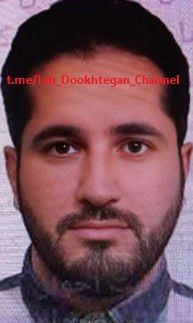
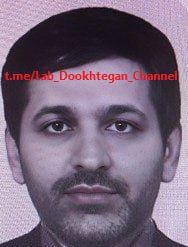
Behnam Shahriari was a senior official within Iran’s Islamic Revolutionary Guard Corps Quds Force, specifically identified as the head of Unit 190. Born between 1965 and 1968, Shahriari operated under multiple aliases, including Seyed Ali Akbar Mir Vakili, Seyed Hamid Reza Shahcheraghi, and Hojatollah Narimani. His use of various identities was a deliberate operational tactic, characteristic of high-value targets involved in clandestine activities, designed to evade detection and circumvent international sanctions.
Shahriari’s demise occurred on June 21, 2025, when he was killed in an Israeli strike in Qom Province, Iran. This elimination was specifically attributed to an Israeli drone strike that targeted his vehicle in western Iran, a considerable distance of over 1,000 kilometers from Israeli territory. The precision and reach of this operation, executed following overnight intelligence, underscore a sophisticated and deep-reaching intelligence capability on the part of Israel, indicating Shahriari was a high-priority target.
As the head of the Quds Force’s Unit 190, Shahriari’s primary responsibility involved the transfer of weapons and cash to various regional proxies, including Hezbollah, Hamas, and the Houthis. His operational history reveals extensive involvement in a complex network of illicit activities. He utilized Quds Force front companies, such as Shahariari Trading Ltd. and Linertransport Kish (LTK), for smuggling operations. Notable incidents include the interception of a weapons shipment destined for Hezbollah in Turkey in 2007, the seizure of 500 tons of weapons aboard the MV Francop in 2009, and the interception of arms transfers to Sudan for Gaza-bound shipments via the Klos C ship in 2014. Beyond logistics, Shahriari played a direct role in planning attacks in Turkey in early 2010 and in Azerbaijan in 2008, where he recruited operatives and managed weapon storage sites.
A particularly significant aspect of Shahriari’s activities is his documented link to the transfer of ammonium nitrate that led to the devastating Beirut Port explosion in August 2020. Reports indicate that Linertransport Kish (LTK), under Shahriari’s management, delivered substantial quantities of ammonium nitrate to Hezbollah between 2011 and 2014. This included a consignment on the MV Rhosus vessel in August 2013, which was subsequently seized and stored in the port, ultimately detonating in 2020 with catastrophic civilian consequences. This connection highlights how Unit 190’s illicit activities, while focused on arms, involved materials with inherent dangers, leading to widespread destruction beyond intended military targets.
Due to his central role in terrorism financing and sanctions evasion, Shahriari was subject to multiple international sanctions. The U.S. Department of the Treasury’s Office of Foreign Assets Control (OFAC) designated him as a Specially Designated National (SDN) in 2011 and again in August 2023, resulting in asset freezes and prohibitions on transactions with U.S. persons. The U.S. Attorney’s Office for the Southern District of New York also announced charges against him, including the seizure of $108 million linked to his network. Additional sanctions were imposed by European and United Kingdom entities.
Primary Name
Aliases
Birth Period
Date of Death
Location of Death
Primary Role
Key Activities
International Sanctions
Behnam Shahriari
Seyed Ali Akbar Mir Vakili, Seyed Hamid Reza Shahcheraghi, Hojatollah Narimani
1965-1968
June 21, 2025
Qom Province, Iran
Head of Unit 190, Quds Force
Weapons transfers to Hezbollah, Hamas, Houthis; Financial network; Planning attacks in Turkey/Azerbaijan; Beirut Port explosion link
US OFAC (2011, 2023), Europe, UK; US charges and $108M seizure
Unit 190 is a highly specialized division within the Islamic Revolutionary Guard Corps Quds Force, with its primary mandate being the clandestine transfer and smuggling of weapons to organizations, groups, and states allied with Iran. The unit, estimated to comprise approximately 20 members, was under the leadership of Behnam Shahriari. Its main recipients of arms transfers include Hezbollah in Lebanon, the Assad regime in Syria, Palestinian militant organizations in Gaza, and Houthi rebels in Yemen.
The operational methods employed by Unit 190 are sophisticated and designed to evade international monitoring. These include concealing weapons as ordinary commercial goods, utilizing shell companies and civilian infrastructure, and falsifying registration documents. This deliberate strategy to blur the lines between civilian and military activities complicates interdiction efforts and carries the inherent risk of implicating civilian assets in military operations.
Unit 190 operates an extensive logistics network spanning multiple regions. Key transportation routes involve using passenger and military flights over Iraq for transfers from Iran to Syria, flights over Turkey for Iran-Lebanon transfers, and civilian ships to Sudan for Gaza-bound shipments. Overland routes through Turkey into Syria are also utilized. The unit coordinates its activities with other specialized Quds Force divisions, such as Unit 340, which focuses on weapons research, development, and operative training, and Division 8000, involved in joint military operations and strategic coordination.
The activities of Unit 190 are a significant contributor to regional instability and directly violate multiple United Nations Security Council resolutions that prohibit Iran from exporting weapons. Despite international sanctions imposed by entities including the United States and the United Kingdom, Unit 190 demonstrates a continuous evolution in its tradecraft, employing increasingly sophisticated methods to circumvent monitoring and enforcement efforts. This adaptability presents an ongoing challenge to counter-proliferation initiatives, requiring continuous adjustments in intelligence and interdiction strategies.
A critical aspect of Unit 190’s operations is its alleged use of the Shahid Rajaee Port. According to Israel’s public broadcaster KAN News, the Shahid Rajaee section of the port was utilized as a “weapons storage for the Islamic Revolutionary Guard Corps Quds Force (IRGC-QF)’s Unit 190 to smuggle ballistic missile materiel to the Houthi terrorists in Yemen”. This information directly connects Unit 190 to the port and its alleged illicit activities, inferring a direct causal link between the unit’s storage of hazardous materials and the subsequent catastrophic explosion at the pier.
Unit Role
The individuals and units discussed in this report are deeply interconnected with significant incidents that shape the ongoing conflict. A prime example is the Shahid Rajaee Pier explosion and its contextualization within the broader “house-scorching war” between Israel and Iran.
Estimated Membership
Key Activities
Smuggling Methods
Key Transportation Routes
Collaborating Units
Primary Recipients
International Sanctions/Violations
The analysis of the provided information highlights a dynamic and multifaceted conflict involving Iran, Israel, and their respective proxies and adversaries. The confirmed elimination of Behnam Shahriari, head of the IRGC Quds Force’s Unit 190, represents a significant operational success against a central figure in Iran’s illicit weapons transfer network. His extensive use of aliases and sophisticated methods underscores the clandestine nature of Unit 190’s operations. The precision of the Israeli strike that killed Shahriari, deep within Iranian territory, suggests a high level of intelligence penetration and operational capability.
Link to Shahid Rajaee Port
Clandestine weapons transfer and smuggling
Approximately 20
Weapons smuggling, Financial networks, Attack planning
Concealing goods, Front companies, Falsified documents
Iran-Syria (flights over Iraq), Iran-Lebanon (flights over Turkey), Iran-Sudan (civilian ships for Gaza), Overland (through Turkey)
Unit 340 (weapons R&D), Division 8000 (joint operations)
The initial query referenced two other individuals: Mehdi Eftekhari and Amir Hossein. The available information provides clarification on their reported status and known affiliations, distinguishing them from the direct context of Behnam Shahriari’s convoy.
Hezbollah, Hamas, Assad regime, Houthis
Violates UNSC resolutions; US/UK sanctions
Used for weapons storage to smuggle ballistic missile materiel to Houthis
Kata’ib Sayyid al-Shuhada (KSS) is an Iran-backed Shiite militia group, operating as part of the broader Islamic Resistance in Iraq (IRI) and integrated into Iraq’s Popular Mobilization Forces (PMF). The United States has designated KSS, along with other IRI groups, as a terrorist entity.
The recent Israeli strike that eliminated Behnam Shahriari also resulted in the deaths of two significant figures associated with KSS: Sayyid Haidar and Abu Ali Khalil. Sayyid Haidar, identified as Haider al-Moussawi, was the head of the security unit of the Kata’ib Sayyid al-Shuhada militias. Abu Ali Khalil, also known as Abu Ali Jawad, was a former chief bodyguard and aide to the late Hezbollah Secretary-General Hassan Nasrallah. Both were killed in an Israeli attack on the border area with Iran on June 21, 2025, with Abu Ali Khalil reportedly visiting Iran from Iraq at the time of his death. The presence of these individuals in proximity to Shahriari’s network suggests a high-level coordination or transfer of personnel, underscoring a direct operational link between Unit 190 and Kata’ib Sayyid al-Shuhada.
Since October 7, 2023, the IRI, including KSS, has been highly active, launching over 180 attacks on US forces in Iraq, Syria, and Jordan, employing drones, rockets, missiles, and mortars. KSS has also claimed numerous drone attacks against Israeli targets, including sites in the Golan Heights and Eilat.
A complex dynamic exists regarding KSS’s stance on disarmament. In April 2025, KSS and other IRI groups reportedly agreed to disarm and cease attacks on Israel, a development influenced by pressure from the Iraqi government and the United States. This agreement was viewed as a potential weakening of Iran’s regional network. However, despite this declared readiness to disarm, the IRI launched drones at a US base in western Iraq on June 14, 2025, following Israel’s preemptive strike on Iran. Furthermore, reports indicate continued drone attacks from Iraq towards Israel in late 2024. This apparent contradiction suggests either a strategic deception to alleviate pressure or a complex internal dynamic within the “Axis of Resistance,” where public declarations may not always align with ongoing operational realities. This highlights the inherent unreliability of public statements from these groups and the often-fractured nature of Iran’s proxy network.
Group Name
Affiliation
Key Leaders (Killed)
Status (Killed)
Primary Activities
US Designation
Disarmament Stance (Declared vs. Actual)
Kata’ib Sayyid al-Shuhada (KSS)
Islamic Resistance in Iraq (IRI), Popular Mobilization Forces (PMF)
Haider al-Moussawi (Sayyid Haidar), Abu Ali Khalil (Abu Ali Jawad)
June 21, 2025 (Israeli strike, Iran-Iraq border area)
Drone/missile attacks on US forces and Israeli targets
Terrorist entity
Declared readiness to disarm in April 2025; continued operational activity reported in June 2025
Regarding Mehdi Eftekhari, the query stated he was “still alive.” However, research material includes an obituary for a Mehdi Eftekhari, Esquire, who was born in Tehran in 1920 and passed away on August 16, 2013, in the United States. This individual was a prominent Iranian lawyer and legal counselor. The direct contradiction between the query’s assertion and the documented death of this individual suggests either a case of mistaken identity due to a common name or outdated intelligence. This discrepancy underscores the critical need for rigorous verification of information, especially when dealing with high-stakes intelligence.
Concerning Amir Hossein, the query indicated he was “also killed.” Research reports the death of Seyed Amir Hossein Feqhi in an Israeli airstrike. He was identified as the deputy head of the Atomic Energy Organization of Iran and a faculty member in nuclear engineering at Shahid Beheshti University in Tehran. While his death occurred in the context of Israeli strikes against Iranian targets, his identified role links him to Iran’s nuclear program rather than directly to Unit 190’s weapons transfer operations or to being physically present in Shahriari’s convoy, as implied by the query. This distinction is crucial for accurately attributing roles and understanding the specific operational contexts of these eliminations within the broader Iranian strategic apparatus.
Name
Reported Status in Query
Confirmed Status in Research
Known Affiliations/Roles
Discrepancies/Notes
Mehdi Eftekhari
“Still alive”
Deceased August 16, 2013
Prominent Iranian lawyer and legal counselor
Contradiction between query and documented death suggests mistaken identity or outdated information.
Amir Hossein
“Also killed”
Seyed Amir Hossein Feqhi killed in Israeli airstrike
Deputy head of Atomic Energy Organization of Iran, nuclear engineering faculty
Killed in Israeli operations, but role linked to nuclear program, not directly Unit 190’s weapons transfers or Shahriari’s convoy.
The explosion at the Port of Shahid Rajaee in Bandar Abbas, southern Iran, occurred on April 26, 2025. This catastrophic event resulted in 57 fatalities and over 1,000 injuries, a revised figure from initial higher estimates. Investigations indicated that the blast originated from containers, possibly containing ammonium perchlorate, a potent oxidizer used in rocket fuel. Preliminary assessments pointed to negligence in handling flammable materials and false declarations of goods as contributing factors. Critically, Israel’s public broadcaster KAN News reported that the Shahid Rajaee section of the port was actively “being used as a weapons storage for the Islamic Revolutionary Guard Corps Quds Force (IRGC-QF)’s Unit 190 to smuggle ballistic missile materiel to the Houthi terrorists in Yemen”. While Israel denied direct involvement in this specific explosion, the presence of military-grade, hazardous materials due to Unit 190’s alleged smuggling activities provides a direct causal link between their illicit operations and the catastrophic incident. The timing of the explosion, coinciding with indirect nuclear negotiations between Iran and the United States, fueled speculation of deliberate sabotage, highlighting how kinetic operations can serve as leverage or disruption tactics in diplomatic processes.
The “house-scorching war” itself, which commenced on June 13, 2025, is characterized by escalating kinetic operations. Israel initiated airstrikes primarily aimed at degrading Iran’s nuclear program and military capabilities. These operations have involved precision strikes by fighter jets and drones targeting missile bases, drone units, nuclear facilities such as Natanz, Isfahan, and Fordo, and naval bases across Iran. The elimination of key Iranian figures, including IRGC commanders and nuclear scientists, has been a consistent feature of these strikes.
Iran has responded with hundreds of drones and missiles, including Shahed-136 drones and precision missiles, targeting Israeli military assets and cities. However, a significant asymmetry in targeting effectiveness is evident. While Israeli strikes have caused substantial damage and hundreds of casualties within Iran , Iran’s retaliatory strikes, though numerous, are largely intercepted or result in comparatively limited damage and casualties in Israel. This qualitative difference suggests Israel possesses a superior intelligence and precision strike capability, enabling it to systematically degrade Iranian military and nuclear infrastructure. The widespread nature of the strikes has also led to environmental concerns from damaged facilities and necessitated airspace closures across the Middle East. The involvement of the United States, through strikes on Iranian nuclear sites and the issuance of terrorism advisories, further underscores the expanding scope and heightened threat environment of this conflict.
Incident
Date
Location
Key Details/Causes
Alleged Perpetrators/Links
Impact
Shahid Rajaee Pier Explosion
April 26, 2025
Bandar Abbas, Iran
Blast from containers, possibly ammonium perchlorate; negligence/false declarations of goods
IRGC Quds Force Unit 190 (alleged use for smuggling ballistic missile materiel)
57 fatalities, >1,000 injuries; significant damage; disruption of Iran’s trade; environmental pollution
Behnam Shahriari’s Death
June 21, 2025
Western Iran (Qom Province)
Israeli drone strike targeting his vehicle
Israel
Elimination of key IRGC Quds Force Unit 190 commander; blow to Iran’s weapons transfer capabilities
KSS Leaders’ Deaths (Haider al-Moussawi, Abu Ali Khalil)
June 21, 2025
Iran-Iraq border area
Israeli airstrike
Israel
Elimination of senior Kata’ib Sayyid al-Shuhada and Hezbollah-linked figures; impact on Iran’s proxy network
“House-Scorching War” (Ongoing)
Started June 13, 2025
Iran, Israel, regional airspace
Israeli precision strikes on Iranian military/nuclear sites; Iranian retaliatory missile/drone attacks
Israel, Iran, US (involved in strikes on Iranian nuclear sites)
Widespread damage and casualties in Iran; limited damage in Israel; regional instability; airspace closures; US terrorism advisories
“Lab Dokhtegan,” meaning “Sealed Lips,” is a hacktivist group that maintains a notable presence on platforms such as Telegram. This group actively engages in intelligence gathering and dissemination activities targeting the Iranian regime.
The group claimed responsibility for a cyberattack on Iranian oil tankers, which reportedly disrupted the operations of 116 vessels belonging to Iranian government-owned companies. This operation allegedly prevented both ship-to-shore and internal communications, likely by exploiting vulnerabilities in maritime satellite communication systems. The synchronized nature of this attack across multiple vessels suggests a high degree of automation and coordination, potentially involving external collaborators described as “friends who are enemies of our enemies”.
A primary objective of Lab Dokhtegan is to expose alleged cyber-criminals affiliated with the Islamic Revolutionary Guard Corps and to publicly condemn what they perceive as the misuse of public funds by the Iranian regime. They have released the identities and images of 15 individuals allegedly working for IRGC cyber division cover companies, such as Naji Technology and Afkar System, linking them to known pro-regime cybercrime groups like Phosphorus, Charming Kitten, Cobalt Mirage, Nemesis Kitten, and TunnelVision. The group has also published lists of Basij members.
Lab Dokhtegan’s stated motivations include informing victims and governments about the identities of their attackers and highlighting the use of ransomware tactics, such as BitLocker, by these alleged cybercrime outfits. The group is part of an increasing number of hacktivist entities targeting the Iranian government, some of which are suspected of operating as state-backed personas.
The group’s public offer of “significant sums of money to the sender of information in exchange for any information about the new 190 commander” indicates a strategic intelligence gathering operation. This initiative aims to capitalize on the leadership vacuum within the IRGC Quds Force’s Unit 190 following the elimination of Behnam Shahriari, suggesting a coordinated effort to disrupt the unit’s command structure. This approach demonstrates that Lab Dokhtegan’s activities serve a dual purpose: direct disruption of Iranian state assets through cyber operations and psychological warfare aimed at eroding trust and morale within the regime and its affiliates by exposing sensitive information.
Group Type
Primary Platform
Key Operations
Stated Objectives
Implications
Hacktivist
Telegram
Cyberattack on 116 Iranian oil tankers; Exposure of 15 alleged IRGC “cyber-criminals” and their cover companies; Publication of Basij member lists
Disrupt Iranian state assets; Expose alleged IRGC cyber activities and misuse of funds; Inform victims/governments about attackers
Strategic intelligence gathering; Psychological warfare; Exploitation of leadership vacuums in IRGC units
Unit 190’s strategic importance is evident in its role as a primary enabler for Iran’s regional influence, supplying a wide array of proxy groups through complex logistics and the exploitation of civilian infrastructure. The alleged use of Shahid Rajaee Port by Unit 190 for smuggling ballistic missile components provides a direct link between their clandestine activities and the catastrophic explosion at the pier, indicating the severe and unintended consequences of such operations.
The deaths of key Kata’ib Sayyid al-Shuhada leaders in the same strike that targeted Shahriari’s network further illustrate the interconnectedness of Iran’s “Axis of Resistance.” While public declarations from these militias suggest a willingness to disarm, their continued kinetic activities against US forces and potentially Israel reveal a complex internal dynamic or a strategic deception designed to manage external pressure while maintaining operational capabilities.
The activities of “Lab Dokhtegan” underscore the ongoing information and cyber warfare dimensions of this conflict. Their targeted cyberattacks and public dissemination of sensitive information on IRGC-affiliated individuals demonstrate a deliberate effort to disrupt the regime and exploit vulnerabilities, such as the leadership vacuum created by Shahriari’s death.
Overall, the conflict is characterized by Israel’s demonstrated capability for precision strikes against high-value military and nuclear targets deep within Iran, contrasting with Iran’s less effective retaliatory strikes. This asymmetry points to a significant intelligence and operational advantage held by Israel. The interwoven nature of these events—from targeted assassinations and large-scale explosions to cyber warfare and proxy engagements—underscores a complex, evolving, and deeply destabilizing regional confrontation with far-reaching implications.

You must be logged in to post a comment.