


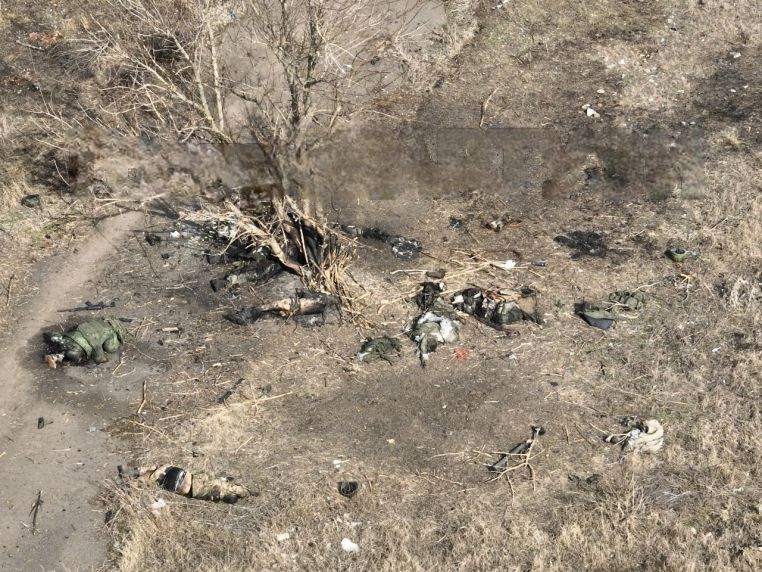
Russia’s battlefield strategy in Ukraine has long revealed a stunning disregard for human life, but the latest documentation from the special forces unit “Omega” and the 2nd detachment “Gostri Kartuzi” shows an especially horrific reality—one that recalls the meat-grinder tactics of past Soviet and Russian military failures. The sheer scale of Russian losses, with entire landscapes littered with bodies, exposes an unrelenting, inhumane approach to warfare that values brute force over tactical ingenuity.
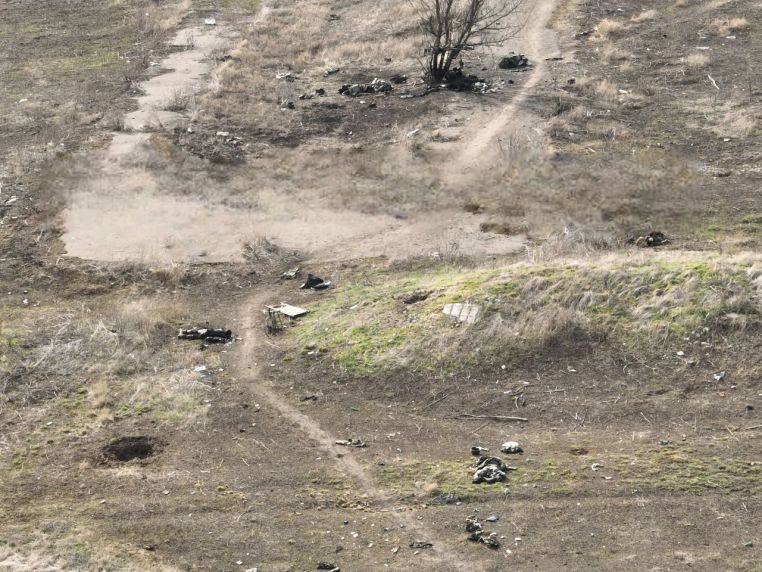
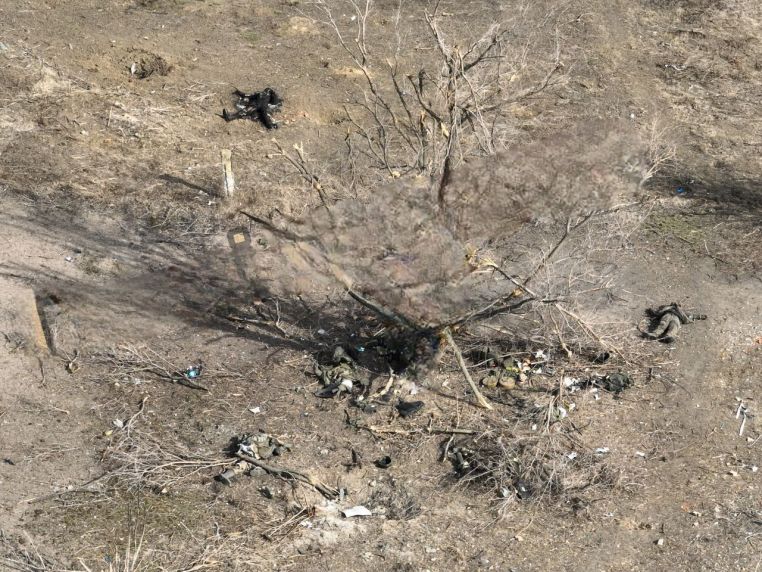
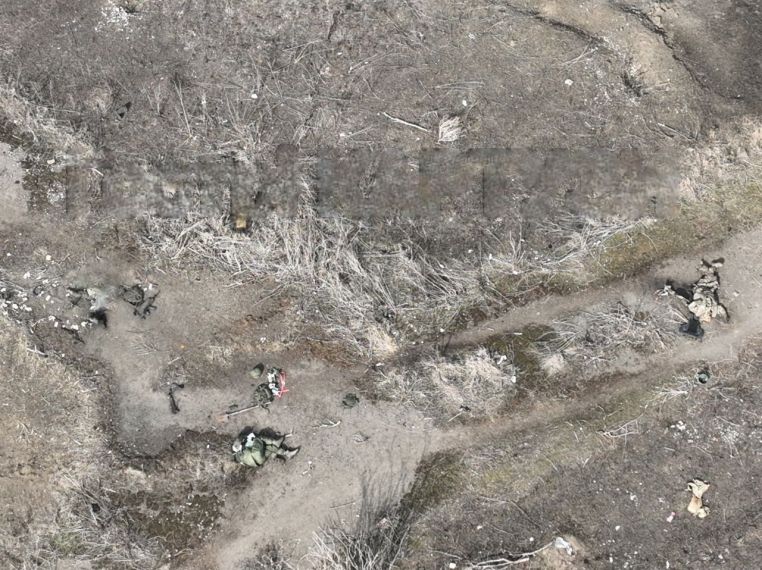
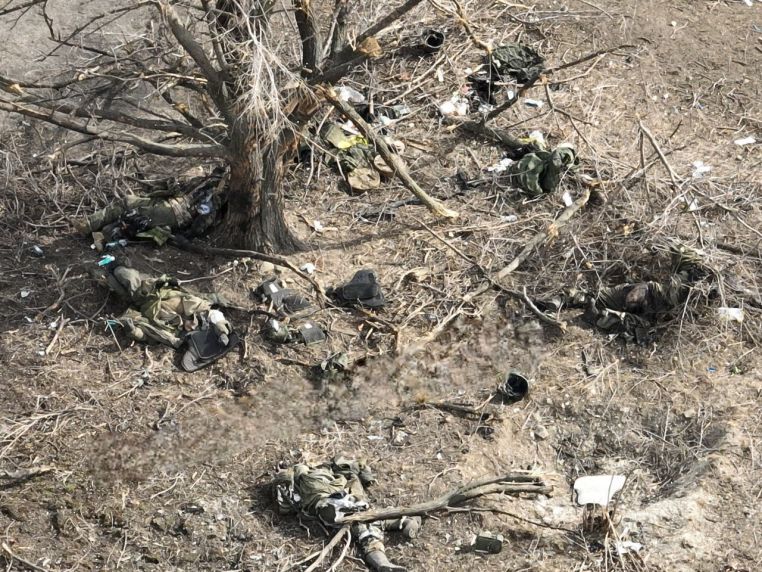
The images and reports detail a gruesome reality in Donbas, where Russian forces send waves of undertrained, poorly equipped soldiers into relentless assaults, knowing that the vast majority will never reach their objective. The small formations, typically three or four soldiers, are pushed forward in suicidal charges, easy prey for Ukrainian drone operators who eliminate them with terrifying efficiency. Eighty percent of those attempting to breach Ukrainian positions are cut down by precision drone strikes before they even get close. The so-called “Russian offensive” has stalled not because of any strategic pause, but because entire waves of troops are being fed into the fire like disposable cannon fodder.
This is not just an operational failure—it is a deliberate strategy by Russian military leadership. Moscow continues to treat its own forces as expendable, refusing to adjust its tactics despite catastrophic casualties. The current peak in drone effectiveness only amplifies the brutality of this approach, as Ukrainian defenders leverage superior situational awareness, technology, and precision strikes to erase incoming Russian troops with ruthless efficiency. The result is a battlefield where the dead outnumber the living, where Russian positions are marked not by advancing forces but by the corpses left behind.
The parallels to World War I-style human wave tactics and Soviet-era disregard for soldier survival are undeniable. Russian command, instead of adapting, is repeating the same catastrophic mistakes seen in Bakhmut, Avdiivka, and Vuhledar. The difference now is that technology has made this strategy even more suicidal. Drones, thermal imaging, and AI-enhanced targeting mean Russian forces cannot even hope to overwhelm defenses through sheer numbers. They are being annihilated before they can engage in meaningful combat.
This level of disregard for human life is a hallmark of the Russian military tradition—one rooted in Stalinist mass assaults, Chechen War attrition, and the bloodbath tactics seen in Syria. But in Ukraine, this approach is reaching its logical and horrifying conclusion. The continued use of untrained convicts, mobilized civilians, and barely-equipped conscripts speaks to Russia’s desperation. Instead of fielding a modern, competent army, the Kremlin has chosen to recycle men as disposable assets, launching them into hopeless death marches that serve no strategic purpose beyond political optics.
The result is a grotesque battlefield reality: an unending stream of Russian dead left to rot in the fields, evidence of a military strategy dictated not by skill or ingenuity but by a deep-rooted willingness to waste lives. These images from the Donbas front do not depict military success—they expose the true cost of Russian aggression: a killing field where Moscow’s soldiers die in vain, their corpses a testament to the incompetence and cruelty of their own command.


You must be logged in to post a comment.