

T he People’s Liberation Army (PLA) of China has undergone dramatic changes since its first push for modernisation in the 1980s and 1990s.
The modernisation has involved both constant updates of doctrine, as well as improvement of equipment and organisational structure to better reflect
the changing demands of warfare. Doctrinally, the PLA has moved away from the ideals espoused by the republic’s founding father Mao Zedong— whose main concern was a major conflict with the erstwhile Soviet Union— to one where the military would be more heavily involved in localised
conflicts.1 The former Chinese Defence Minister Zhang Aiping observed in 1983, seven years after Mao’s death: “The principle of war is to achieve the greatest victory at the smallest cost. To achieve this we should depend not only on political factors, but also on the correct strategy and tactics of the war’s commander, the sophisticated nature of ourmilitary
equipment, the quality of our personnel who use the equipment etcetera.” The implementation of this strategy is apparent in the ongoing stand-off between India’s and China’s forces in Ladakh, along the Line of Actual
Control (LAC).
Drawing lessons from China’s war against Vietnam in early 1979, the
PLA took serious steps in reorganisation.3 Recognising the diminishing
likelihood of a total war,4 the Central Military Commission (CMC) under Deng Xiaoping instituted crucial changes between 1985 and 1995—in doctrine, organisation, and equipment, while keeping in mind local yet intensive wars. Some of these changes included greater emphasis on joint operations, production of indigenous equipment, and converting the PLA into a leaner and more efficient fighting force, reducing its total personnel from 13.3 million in 1985 to 5.4 million in 1995 (See Table 1)
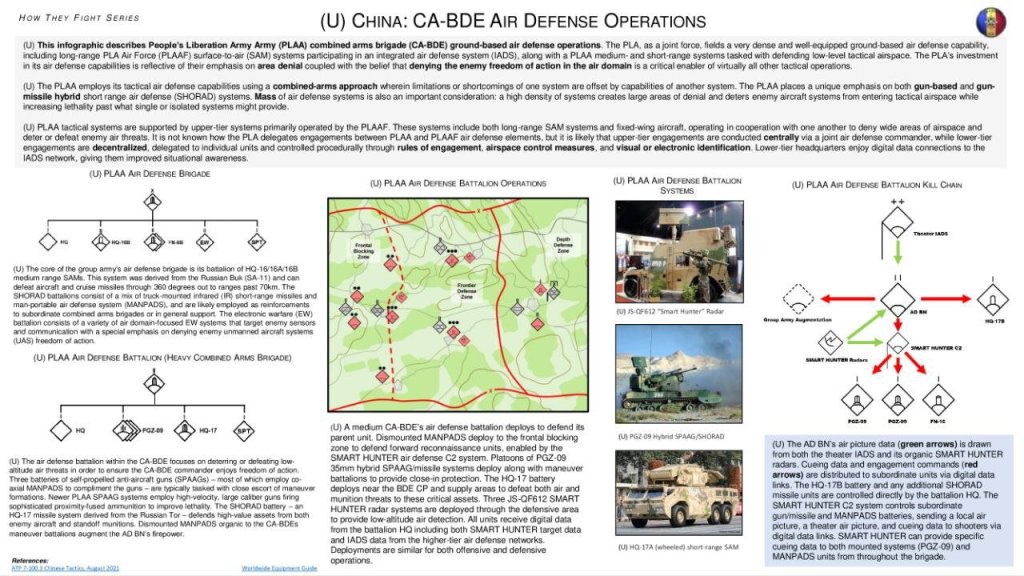
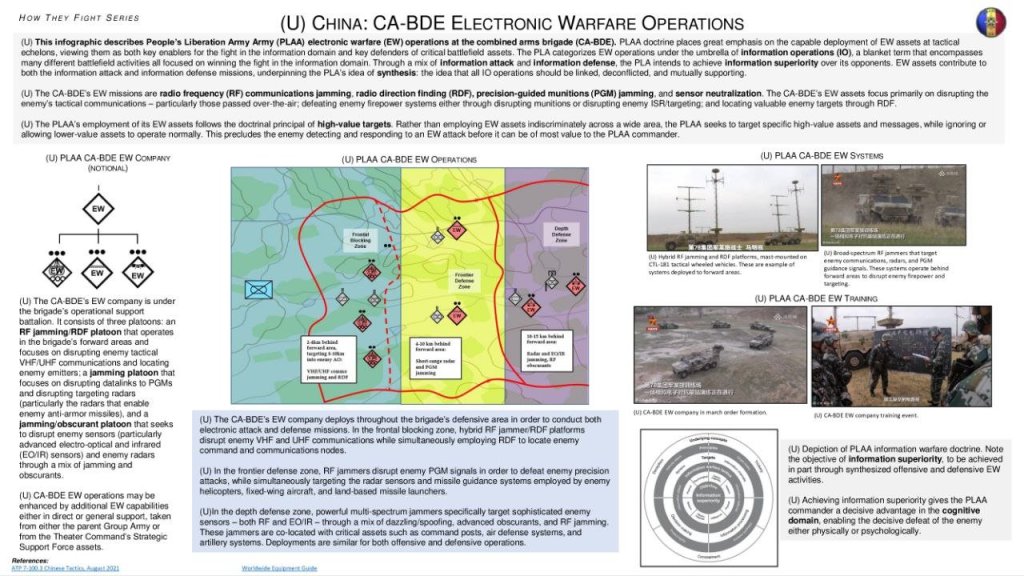
Tactics of actions of units and subunits of air defense and electronic warfare of the PLA.


You must be logged in to post a comment.