


Komor
Mission
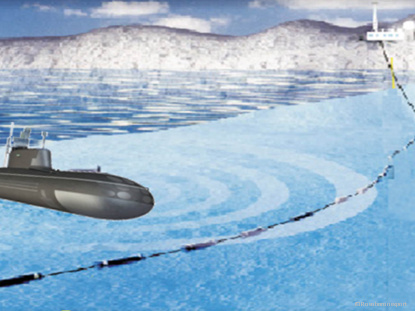
The Komor electromagnetic stationary submarine detection system is designed to control the sea-situation to ASW border.
Features
- detecting undersea targets by their electromagnetic/magnetic fields;
- calculation their coordinates and moving direction;
- classification of the detected underwater targets at controlled borderlines;
- automatic transmission the submarine coordinates to coastal control post.
Composition
- remote undersea equipment, including sea-bottom modules, relay units, and cable-antenna;
- equipment of the coastal control post including receiver, data display and control unit.
Capabilities
The electromagnetic border is line of the sea-bottom detection modules. It is activated alarm signal when target crosses controlled borderlines. The antenna generates a primary electromagnetic field (illumination field). When an underwater object crosses it, the system generates a secondary electromagnetic field recorded by the antennae. The recorded data is transmitted to the onshore post.
Advantages
- highly covert due to the undersea electromagnetic detection capability;
- automatic operation (registration of current situation, display of intrusions on onshore post monitor, and sound alarm);
- high anti-interference ability;
- relatively low cost;
- possibility of integration into complete situational awareness systems
Main characteristics
Length of the detection border, km
up to 100
Antenna range from coastline, km
up to 75
Setting depth, m
30-400
Accuracy of the coordinates measurement, m
±500
Submarine detection probability
at least 0,9
Operators
1
Onshore post area, m2
10
Detection range, km
up to 100

